Monthly Archive: May 2026

Why Lamb Handles Bold Flavors Better Than Most Proteins

Flavor intensity is often the dividing line between a remarkable meal and a memorable one, and Superior Farms lamb stands apart because it consistently holds up to bold spices, marinades, and layered seasoning in a way most proteins cannot, allowing cooks to build deeper, more complex dishes without losing the integrity of the meat itself. While milder proteins tend to fade or get overwhelmed, lamb absorbs, balances, and elevates strong flavors.

This is what makes it uniquely versatile across cuisines that rely on intensity rather than subtlety.

Why Lamb Responds Differently to Bold Flavoring

Not all proteins react the same way to seasoning. Chicken, for example, often acts as a neutral base, while beef can dominate with its richness. Lamb occupies a distinct middle ground.

Its ability to handle bold flavors is due to:

  • A naturally rich and slightly earthy profile
  • Balanced fat content that carries seasoning effectively
  • Muscle structure that absorbs marinades more deeply
  • Flavor complexity that complements spices rather than competing with them

Instead of masking lamb’s taste, bold seasoning tends to enhance it.

The Role of Fat in Flavor Absorption

Fat is one of the most important carriers of flavor, and lamb contains just enough to distribute spices evenly throughout the meat.

This process leads to:

  • Better integration of marinades during cooking
  • Enhanced aroma and depth
  • A more cohesive flavor profile across each bite
  • Greater tolerance for aggressive seasoning

This versatility is why lamb performs well in spice-forward cuisines.

Global Cuisines That Rely on Lamb’s Flavor Strength

Many culinary traditions naturally lean toward lamb because of how well it works with bold ingredients.

Examples include:

  • Mediterranean dishes with garlic, lemon, and herbs
  • Middle Eastern recipes using cumin, coriander, and paprika
  • South Asian preparations built on layered spice blends
  • North African dishes featuring slow-cooked, spice-rich stews

In each case, lamb acts as a foundation rather than a background ingredient.

How Marinades Interact With Lamb

Marinades behave differently depending on the protein. With lamb, they penetrate more effectively and create a deeper flavor impact.

Key marinade characteristics that work well with lamb:

  • Acidic elements like yogurt, lemon, or vinegar to tenderize
  • Spice blends that develop complexity over time
  • Oils that help distribute seasoning evenly
  • Aromatics such as garlic, ginger, and herbs

When given time, these components integrate fully into the meat.

Recipe Spotlight: Garlic and Herb Grilled Lamb Chops

(Recipe adapted from americanlamb.com)

A simple but bold preparation highlights how lamb holds flavor without losing its character.

Why it works:

  • High-heat searing locks in flavor
  • Herbs and garlic complement the natural richness
  • Minimal ingredients still produce strong results

This type of dish shows that bold flavor does not require complexity.

Why Spice-Heavy Dishes Work Better With Lamb

Spice-heavy dishes can overwhelm lighter proteins. Lamb, however, maintains its presence even when heavily seasoned.

This results in:

  • Balanced dishes where no single element dominates
  • Depth of flavor rather than surface-level seasoning
  • A richer, more satisfying eating experience
  • Better compatibility with slow-cooked preparations

The result is layered flavor rather than diluted taste.

Recipe Spotlight: Moroccan-Spiced Lamb Stew

(Recipe adapted from americanlamb.com)

Slow cooking allows spices to fully develop while the lamb absorbs and complements them.

Key elements:

  • Warm spices like cinnamon, cumin, and turmeric
  • Long cooking time for depth
  • Tender texture paired with bold seasoning

This recipe demonstrates how lamb supports extended flavor development.

The Advantage of High-Heat Cooking

Lamb performs exceptionally well under high heat, which helps intensify both the meat and the seasoning.

High-heat benefits include:

  • Caramelization of the exterior
  • Concentration of flavors
  • Enhanced texture contrast
  • Faster cooking without sacrificing depth

This makes lamb ideal for grilling and searing.

Recipe Spotlight: Spiced Lamb Kebabs

(Recipe adapted from americanlamb.com)

Kebabs showcase how lamb holds up to aggressive seasoning and direct heat.

Why this works:

  • Ground or cubed lamb absorbs spices evenly
  • Quick cooking preserves moisture
  • Bold seasoning remains prominent after grilling

It is a clear example of flavor-forward cooking done right.

Balancing Boldness Without Overcomplicating

One of the strengths of lamb is that it does not require excessive ingredients to create impact. Even simple combinations can produce strong results.

Effective approaches include:

  • Pairing lamb with just a few high-quality spices
  • Using marinades that enhance rather than mask
  • Allowing the natural flavor to remain central
  • Avoiding unnecessary complexity

This balance is what makes lamb adaptable to different skill levels.

Why Lamb Elevates Everyday Cooking

Bold flavor is often associated with special occasions, but lamb brings that intensity into everyday meals without requiring complicated preparation.

This makes it suitable for:

  • Quick grilled dishes with strong seasoning
  • Simple pan-seared meals with herb blends
  • One-pot recipes with layered spices
  • Casual meals that still feel elevated

It combines convenience with depth.

Final Thoughts

Lamb’s ability to handle bold flavors is not accidental; it is rooted in its composition, structure, and natural profile. Unlike proteins that either fade or overpower, lamb integrates seasoning in a way that creates balance and depth.

By understanding how it interacts with spices, marinades, and cooking methods, it becomes clear why lamb remains a staple in some of the most flavor-rich cuisines in the world. Whether grilled, roasted, or slow-cooked, it consistently delivers dishes that are both bold and cohesive.

Why Simple Seasoning Often Works Better Than Complex Recipes for Lamb

Clarity of flavor is often lost when too many elements compete, and Superior Farms lamb performs best when seasoning is kept direct and controlled, allowing its natural richness to lead rather than forcing complexity through excessive ingredients. The goal is not to build flavor from scratch, but to support what is already present.

Lambs do not need to be constructed; they need to be framed.

Why Complexity Can Work Against Flavor

In many recipes, complexity is treated as a shortcut to depth. More spices, more steps, and more layers are assumed to produce better results. With lamb, this approach often has the opposite effect.

Overcomplication can lead to the following:

  • Competing flavors that dilute the overall profile
  • Loss of the meat’s natural character
  • Muddy or indistinct taste
  • Unnecessary preparation without meaningful improvement

When too many variables are introduced, clarity disappears.

What Makes Lamb Naturally Flavor-Forward

Lamb already carries a distinct profile that does not require heavy modification. Its composition allows it to stand on its own with minimal intervention.

This comes from:

  • A naturally rich and slightly earthy taste
  • Balanced fat content that enhances flavor
  • A structure that responds well to direct heat
  • Depth that develops even with simple preparation

Because of this, seasoning should support, not replace.

The Role of Salt as a Primary Tool

Salt is often underestimated, but with lamb, it becomes one of the most important elements.

When applied correctly, it:

  • Enhances natural flavor without masking it
  • Draws out moisture to improve surface texture
  • Supports the development of a proper crust
  • Balances richness without adding complexity

Often, salt alone can define the dish.

Recipe Spotlight: Grilled Lamb Chops With Salt, Pepper, and Olive Oil

(recipe from americanlamb.com)

A minimal approach that highlights lamb’s natural qualities.

Why it works:

  • Limited ingredients keep the flavor focused
  • High heat creates contrast between crust and interior
  • No competing elements to dilute the taste

This dish is a clear example of restraint producing better results.

Why Fewer Ingredients Create Stronger Outcomes

Using fewer ingredients forces precision. Each element has a purpose and contributes directly to the final result.

This leads to:

  • Clearer flavor definition
  • Better control over seasoning
  • More consistent results
  • Reduced risk of imbalance

Simplicity improves execution.

How Heat Replaces Complexity

Proper heat application can do more for flavor than additional ingredients. Searing, grilling, or roasting creates depth through technique rather than layering.

Heat contributes by:

  • Creating caramelization on the surface
  • Concentrating natural juices
  • Enhancing aroma
  • Building texture contrast

These effects often replace the need for complex seasoning.

Recipe Spotlight: Roasted Lamb With Garlic and Herbs

(recipe from americanlamb.com)

A simple preparation that relies on technique.

Key strengths:

  • Minimal ingredients with clear roles
  • Roasting develops flavor without added complexity
  • Garlic and herbs enhance rather than dominate

It demonstrates how structure and timing can define the dish.

Why Over-Seasoning Masks Quality

When seasoning becomes excessive, it shifts attention away from the main ingredient. This is particularly noticeable with lamb.

Over-seasoning can:

  • Hide the natural flavor of the meat
  • Create an imbalance between ingredients
  • Make dishes feel heavy or overwhelming
  • Reduce the ability to distinguish individual elements

The result is less refined, not more complex.

The Value of Ingredient Restraint

Restraint is not limitation; it is control. Knowing when to stop adding ingredients is as important as knowing what to include.

Effective restraint involves:

  • Selecting a small number of complementary flavors
  • Allowing each element to remain identifiable
  • Avoiding unnecessary additions
  • Focusing on execution rather than expansion

This approach leads to more precise outcomes.

Recipe Spotlight: Pan-Seared Lamb With Lemon and Thyme

(recipe from americanlamb.com)

A balanced dish built on simplicity.

Why it stands out:

  • Bright acidity contrasts with richness
  • Herbs add subtle depth without overpowering
  • Quick cooking preserves natural flavor

It shows how minimal additions can create complete dishes.

Why Simplicity Improves Consistency

Complex recipes introduce more variables, increasing the likelihood of inconsistency. Simpler methods reduce that risk.

Benefits include:

  • Easier replication of results
  • Greater control over timing and temperature
  • Reduced margin for error
  • More predictable flavor outcomes

Consistency becomes easier to achieve.

Reframing What “Better” Means in Cooking

Better does not always mean more detailed or more elaborate. With lamb, “better” often means more controlled and more intentional.

This includes:

  • Prioritizing the quality of ingredients
  • Using a technique to build flavor
  • Limiting unnecessary steps
  • Allowing the protein to remain central

This shift changes how dishes are approached.

From Complexity to Precision

The difference between complex and effective cooking is precision. Lamb rewards precision because its natural qualities are already well-defined.

Precision involves:

  • Applying the right amount of seasoning
  • Using appropriate heat levels
  • Timing the cooking process carefully
  • Avoiding unnecessary adjustments

Each decision has a clear impact.

Final Thoughts

Lamb does not require heavy seasoning or complex recipes to deliver strong results. Its natural flavor profile provides a solid foundation that benefits more from restraint than from excess.

By focusing on simple seasoning, controlled technique, and clear intent, lamb can achieve depth without complication. Often, reducing ingredients leads to a more defined, balanced, and effective dish, making simplicity not a limitation but an advantage.

What Makes Lamb Ideal for Layered, Slow-Build Flavor Dishes

Depth of flavor is not created instantly; it develops over time, and Superior Farms lamb stands out because its structure, fat composition, and natural richness make it uniquely suited for layered, slow-build flavor dishes where ingredients evolve together rather than sit on the surface. While some proteins lose identity during long cooking processes, lamb integrates into them, becoming more complex without fading.

This is why it plays a central role in cuisines built around gradual flavor development.

Why Slow Cooking Changes Flavor Dynamics

Slow cooking is not just about tenderness; it is about transformation. As heat is applied over time, ingredients interact, break down, and combine.

This process allows:

  • Spices to release and deepen
  • Aromatics to integrate fully into the dish
  • Liquids to concentrate and thicken
  • Proteins to absorb surrounding flavors

Lamb responds particularly well to this process because it retains its character while evolving.

The Structural Advantage of Lamb

Not all meats are suited for extended cooking. Lamb’s muscle structure and connective tissue allow it to break down gradually without becoming dry or bland.

This leads to:

  • Tender texture that develops naturally over time
  • Retention of moisture during long cooking
  • Absorption of surrounding flavors
  • A balance between richness and depth

This structural quality is essential for slow-build dishes.

How Fat Contributes to Layered Flavor

Fat plays a critical role in flavor development, and lamb contains enough to enhance without overwhelming.

As it renders during cooking, it:

  • Distributes flavor evenly throughout the dish
  • Carries spices and aromatics deeper into the meat
  • Adds body and richness to sauces and broths
  • Creates a cohesive flavor profile

This gradual release is what gives slow-cooked lamb its signature depth.

The Role of Aromatics and Base Ingredients

Layered dishes rely on building a foundation before the main protein is fully integrated. Lamb complements this process rather than competing with it.

Typical base components include the following:

  • Onions, garlic, and ginger for foundational depth
  • Tomatoes or broths for structure and acidity
  • Herbs and spices that develop over time
  • Oils that help bind flavors together

Lamb absorbs these elements while contributing its own richness.

Recipe Spotlight: Slow-Braised Lamb Shanks

(Recipe adapted from americanlamb.com)

A classic example of how lamb develops flavor over extended cooking.

Why it works:

  • Long braising time allows connective tissue to break down
  • Broth, herbs, and aromatics build depth
  • Meat becomes tender while absorbing surrounding flavors

This dish reflects how patience transforms both texture and taste.

Why Time Enhances Complexity

Unlike quick-cooking methods, slow cooking allows flavors to evolve in stages. Early ingredients set the base, while later additions refine the final result.

This progression creates:

  • Multiple layers of flavor rather than a single note
  • Greater depth and richness
  • Balanced integration of all components
  • A more complete and satisfying dish

Lamb supports each stage without losing its presence.

Spice Integration Over Time

In slow-build dishes, spices do more than season; they transform. Heat and time allow them to interact with both the meat and the cooking liquid.

This results in:

  • Softer, more rounded spice profiles
  • Elimination of sharp or overpowering notes
  • Deeper infusion into the meat
  • A unified flavor experience

Lamb’s composition allows it to carry these changes effectively.

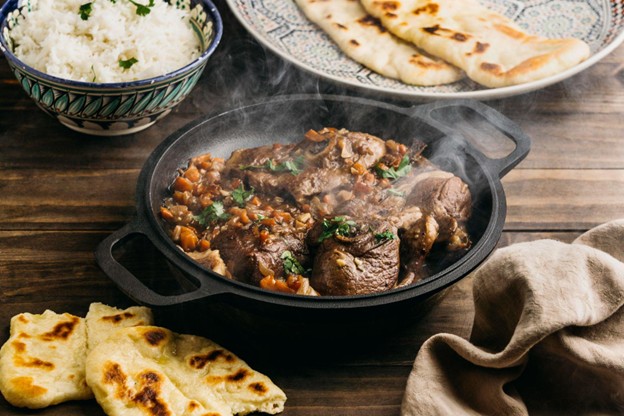
Recipe Spotlight: Lamb Stew With Root Vegetables

(Recipe adapted from americanlamb.com)

A one-pot dish that demonstrates how ingredients evolve together.

Key elements:

  • Slow simmering allows vegetables to release flavor
  • Broth thickens and concentrates over time
  • Lamb absorbs and enhances the overall profile

The result is a dish where no single element stands apart.

Why One-Pot Cooking Works So Well With Lamb

Layered flavor often comes from a simple structure. One-pot cooking allows all components to interact continuously.

Benefits include:

  • Consistent flavor integration
  • Reduced loss of moisture
  • Efficient cooking process
  • Easier control over seasoning and texture

Lamb thrives in this environment due to its adaptability.

Balancing Richness With Depth

Lamb’s richness must be balanced to prevent dishes from becoming heavy. Slow cooking allows for gradual adjustment.

This balance is achieved through:

  • Adding acidity from tomatoes or citrus
  • Incorporating herbs to lighten the profile
  • Controlling fat through cooking technique
  • Adjusting seasoning throughout the process

Balance ensures that depth does not become overwhelming.

Recipe Spotlight: Spiced Lamb Curry

(Recipe adapted from americanlamb.com)

A dish built entirely on layered flavor development.

Why it stands out:

  • Spices are introduced in stages
  • Slow cooking deepens complexity
  • Lamb integrates fully into the sauce
  • Final result is rich but balanced

This showcases how controlled layering creates depth.

Why Lamb Excels in Flavor-Building Cuisines

Many global cuisines rely on slow, layered cooking techniques, and lamb is often the preferred protein in these traditions.

This is because it:

  • Absorbs complex spice blends effectively
  • Maintains texture over long cooking periods
  • Enhances rather than competes with other ingredients
  • Delivers consistent results across different methods

Its adaptability makes it a natural fit for these approaches.

From Process to Outcome

Layered cooking is a process-driven approach. The final dish reflects how well each stage was executed.

With lamb, this means:

  • Building a strong base before adding the meat
  • Allowing enough time for integration
  • Adjusting seasoning as flavors develop
  • Finishing with balance and clarity

Each step contributes to the overall result.

Final Thoughts

Lamb’s ability to support slow, layered flavor development is rooted in its structure, fat content, and natural richness. It does not simply sit within a dish; it evolves with it, absorbing and enhancing every element over time.

For cooks looking to create depth without unnecessary complexity, lamb provides a reliable foundation. When given time and the right approach, it delivers dishes that are rich, balanced, and fully developed, making it one of the most effective proteins for slow-build cooking.